Pest Animal Management
1080 Baiting Program
Council has a twice yearly 1080 baiting program for the control of wild dogs, foxes and feral pigs. 1080 baiting may be an option for management of these declared pests.
Please note: If you are undertaking the 1080 Baiting Program, you are required to notify all adjacent and adjoining property owners/users of the property where 1080 baits are used. Contact Council if you require a list of names and addresses for notification purposes.
How to register: Click here to complete the online registration form and nominate your preferred Bait Station location.
Land users are responsible for managing pest animals on their land. Information on the identification and management of pest animals is provided below, along with the council services that support Gympie residents in the management of pest animals.
About our 1080 Baiting Program
Are wild dogs, foxes, or feral pigs impacting your property or business?
Council runs a twice yearly 1080 baiting program to help manage these pest animals. Registrations are essential. To register, call Council's Biosecurity team on 1300 307 800 or email lands.protection@gympie.qld.gov.au
New Changes to the Program:
- Ready-to-use baits - Prepared fresh meat batis are provided by council, bring your own leak proof sealable bucket
- Tailored to your property - bait limits are based on your land size
- Faster and safer - all baits are prepped and packaged centreally, reducing handling and contaimination risks
- Convenient delivery - baits available at key local pickup locations for a one-stop collection
Click here(PDF, 10MB) to find out more for our upcoming baiting program.
Council can support landowners to conduct 1080 baiting programs at other times during the year by appointment.
Please read the procedure for ground baiting with 1080 for the invasive species you wish to control, listed below, and consider the information contained within to determine if 1080 baiting is appropriate for your needs.
Please Note : You are required to notify all adjacent and adjoining property owners/users of the property laying 1080 baits. Contact council if you require a list of names and addresses for notification purposes.
Top pest animals in the Gympie Region
Wild Dog
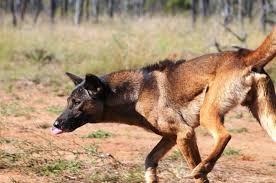
A medium-sized canid with a lean, hardy body designed for speed, agility, and stamina.
Wild dogs are a major pest species impacting on grazing industries and the environment. They prey on livestock and native animals. (includes all wild-living dogs, such as dingoes, stray and escaped domestic dogs, and their hybrids).
For Council supported management tools, click here (go to Council services).
- Advice on control techniques
- Cage trapping
- Baiting (1080, PAPP, CPEs)
Call 1300 307 800 to get involved.
Visit the Wild Dog toolkit for management info
Foxes

A small to medium sized canid, red foxes have a long body and tail, covered in red fur (colour morphs also include silver, black and platinum). They have black fur on their feet, the tips of their ears, and a distinctive white tuft at the end of the tail.
Foxes pose a threat to livestock, as they prey on poultry, lambs and goat kids. In high density areas they may also be a health risk to humans and pets, through transmission of diseases. (such as distemper, parvo virus and mange.
For details on Council supported management tools, click here (go to Council services)..
- Advice on control techniques
- Cage trapping
- Baiting (1080, PAPP, CPEs)
Call 1300 307 800 to get involved.
Got to the European foxes toolkit
Feral Pig
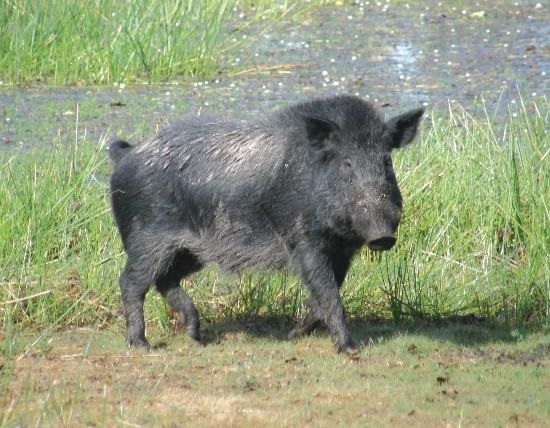
Feral pigs are typically smaller, leaner and more muscular than domestic pigs, with well-developed shoulders and neck, and smaller, shorter hindquarters. The coat is usually black, buff, or black-and-white spotted.
Feral pigs are a serious environmental and agricultural pest across Australia. They prey on native animals, kill young livestock, and dig up large expanses of soil and vegetation in search of food. Feral pigs are often found around wetlands and river systems where they foul the water and cause erosion.
For Council supported management tools, click here (go to Council services).
- Advice on control techniques
- Pen trapping
- Baiting (1080 and Hoggone)
Call 1300 307 800 to get involved.
Go to the feral pig toolkit
Feral Cat
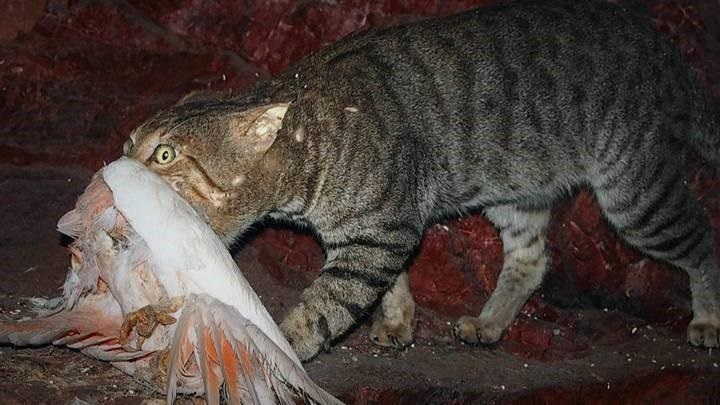
The Feral Cat has a similar appearance to domestic cats, but often has increased muscle development, particularly around head, neck and shoulders. All have usual cat coat colours.
Feral cats are the same species as domestic cats but live, hunt and reproduce in the wild. They are carnivores and exceptional hunters preying on and killing vast numbers of native animals. Cats are solitary animals and mainly hunt at night.
For Council supported management tools, click here (go to Council services).
- Advice on control techniques
- Cage trapping
- Baiting (1080)
Call 1300 307 800 to get involved.
Go to the Feral cat toolkit
Rabbits

Rabbits are small, furry, mammals with long ears, short fluffy tails, and strong, large hind legs. They have 2 pairs of sharp incisors.
Rabbits damage native plants and directly compete with native wildlife for food and shelter. They reduce crop yields and prevent seedlings from growing. Their digging and browsing leads to a loss of vegetation cover, which results in slope instability and soil erosion.
Rabbits are Australia’s most widespread and destructive environmental and agricultural vertebrate pest.
For Council supported management tools, click here (go to Council services).
- Advice on rabbit control techniques
- Cage trapping
- Baiting
- Biocontrol
Call 1300 307 800 to get involved.
Go to the Rabbit toolkit
Tilapia
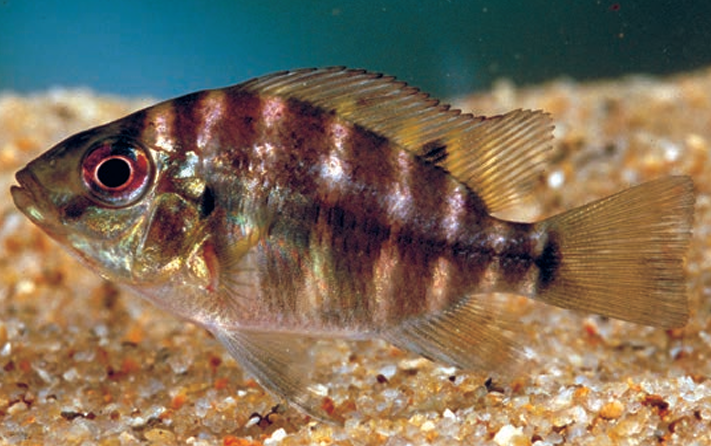
Tilapia, an introduced fish species, is considered a major threat to Australia’s native aquatic biodiversity.
Their presence in the Mary River poses a serious risk to the local ecosystem. Tilapia aggressively compete for habitat and food, disrupt plant beds while nesting, and prey on the eggs and young of native fish species.
They reproduce rapidly, holding over 1,000 eggs in their mouths at any given time, making them as destructive to our waterways.
Local species, such as the iconic Mary River Cod, are also at risk if Tilapia numbers continue to increase in the region.
Go to the Tilapia toolkit
Indian Myna
In Australia, Indian Mynas are often mistaken for the native noisy miner, and sometimes the yellow-throated miner, due to their similar size and appearance.
Indian Myna identifying features:
- Brown body
- Glossy black head, neck and upper breast
- Distinctive white wing patches, clearly visible in flight
Indian Mynas are considered a threat to native biodiversity. They are highly territorial, compete aggressively for nesting hollows, and breed quickly. As opportunistic feeders, they will eat almost anything, including native bird eggs and chicks, and can displace wildlife from tree hollows.
How to discourage Indian Mynas on your property:
Do not:
- Feed wild birds, as this encourages Indian Mynas and creates reliance for native species
- Leave pet food outside during the day, as it attracts them
Do:
- Limit access to stock and poultry feed
- Plant dense native vegetation, as Indian Mynas prefer open, grassy areas
- Actively deter them from your yard so they don’t settle
- Regularly remove nesting material from gutters, eaves and tree hollows (after checking it’s not a native species)
Go to the Indian Myna toolkit
Trap Loan
Residents can loan a cage trap for wild dogs, feral cats, foxes, and rabbits. Council also has pen traps available for the control of feral pigs.
Wild dog cage trapping
To determine if cage trapping is appropriate for your needs, consider the information supplied here by - PestSmart (trapping of wild dogs using cage traps (DOF002) Standard operating procedure).
You will need to have access to a licenced firearm holder to provide humane euthanasia for the ENTIRE trapping program.
Council do not loan traps for the purpose of wild dog trapping, however can provide information on appropriate control methods for wild dogs, based on your land use and needs – please contact council on 1300 307 800
Feral cat cage trapping
To determine if cage trapping is appropriate for your needs, consider the information supplied here by - PestSmart (trapping of feral cats using cage traps (CAT002) standard operating procedure).
Trapped cats can be taken to Gympie’s RSPCA to check for microchip and rehoming possibilities – call RSPCA on 5482 9407 to check opening hours so trapping is only performed on the days the RSPCA will be open, if this is your chosen method of dealing with the cat.
Alternatively, you will need to have access to a licenced firearm holder to provide humane euthanasia for the ENTIRE trapping program.
Please contact council on 1300 307 800 to submit a trap loan request.
Fox trapping
To determine if cage trapping is appropriate for your needs, consider the information supplied here by - PestSmart (trapping of foxes using cage traps (FOX006) standard operating procedure).
You will need to have access to a licenced firearm holder to provide humane euthanasia for the ENTIRE trapping program.
Please contact council on 1300 307 800 to submit a trap loan request.
Feral pig trapping
Feral pigs cause agricultural damage through preying on newborn lambs, reducing crop yields, damaging fences and water sources, and competing with stock for feed by consuming or damaging pasture.
To determine if cage trapping is appropriate for your needs, consider the information provided here by - PestSmart (trapping of feral pigs (PIG001) standard operating procedure).
You will need to have access to a licenced firearm holder to provide humane euthanasia for the ENTIRE trapping program.
Please contact council on 1300 307 800 to submit a trap loan request.
Rabbit cage trapping
To determine if cage trapping is appropriate for your needs, consider the information provided here by - PestSmart (trapping using soft net traps (GEN003) standard operating procedure).
Note that council loans cage traps, but the procedure remains the same.
You will need to have access to a licenced firearm holder to provide humane euthanasia for the ENTIRE trapping program, or an alternative humane euthanasia method, as per procedure GEN003. If you are able to deliver the trapped rabbit to Gympie, council can assist with euthanasia.
Please contact council on 1300 307 800 to submit a trap loan request.
You may also be interested in rabbit biocontrol – RHDV (below).
Wild dog and feral pig bounty claim
Process for wild dog and feral pig bounty claim
Please read the Bounty program information sheet here(PDF, 202KB) and if you meet the criteria (bounty MUST be collected from a property within the Gympie region), you can download and fill out the following forms:
As per the Bounty program information sheet, please contact Council on 1300 307 800 to make an appointment to submit your completed paperwork and wild dog scalps and/or feral pig snouts for bounty claim. Bounty may be submitted by appointment only at the Old Bank Building, 46 Nash St, Gympie or The Kilkivan Branch Office, 26 Bligh St, Kilkivan.
Other Controls
Pindone control of rabbits
Poisoning with pindone is used to minimise the impact of the introduced European rabbit (Oryctolagus cuniculus) on agricultural production and the environment.
Please consider the information from - PestSmart (ground baiting of rabbits with Pindone (RAB004) standard operating procedure) to determine if pindone is appropriate for your needs. Council is not actively involved in pindone releases on private property – contact your local rural supplier for more information.
Hoggone for feral pigs
HOGGONE meSN feral pig bait is currently available as a manufactured bait from Animal Control Technologies Australia – https://animalcontrol.com.au/products/hoggone.
This product must be used in conjunction with the HogHopper bait delivery system and Council has two of these bait boxes for loan to Gympie residents baiting with HOGGONE.
Council does not use coordinate the use of Hoggone for feral pig control on private property, but you can contact Council on 1300 307 800 to arrange for bait box loan.
Pest animal control methods
Integrated pest management recognises that in many situations, effective, long-term control of pest animals is best achieved by combining several complementary control methods. https://www.business.qld.gov.au/industries/farms-fishing-forestry/agriculture/land-management/health-pests-weeds-diseases/pests/controlling/methods
Complementary control methods include:
- chemical control - using pesticides and insecticides to control pest animals (baiting)
- physical control - using mechanical tools, equipment and machinery to capture, exclude or destroy pest animals, including trapping, shooting, harbour destruction and fencing.
- biological control - using animal-specific diseases to control pest animal populations (including RHDV) or protecting livestock with guardian animals.
Useful resources
Pest Smart
PestSmart provides best practice information on how to plan, manage and improve pest animal control programs in Australia. Popular info include the wild dog, feral pig, fox and rabbit management tool kits.
https://www.pestsmart.org.au/
Feral Scan
Record pest animal activity in your local area to protect farms, biodiversity and communities. Use the information and tools to develop an integrated pest management plan.
https://www.feralscan.org.au/
FAQ - Pest animal
What do I do if there is a pest animal on my property?
PESTSMART is one of the best websites for pest animal information.
It provides step-by-step guides on how to manage all Queensland’s top pests from cane toads to feral camels, and everything between.
What do I do if foxes and feral cats are killing my chickens and native birds.
Foxes and cats prey on many birds and small mammals. If they are making a meal of your poultry make sure your chicken house is predator proof. For more tips:
- Check out European foxes on PESTSMART and work through the Management Framework:
- Visit PESTSMART to help manage feral cats. Control tips are under Manage within the Management Framework.
What can I do if wild dogs are attacking my livestock?
Wild dogs prey on native animals, domestic livestock and pets. There are several actions you can take to protect animals from falling prey to wild dogs. This may include fencing, trapping, shooting, poison baiting, guard animals and aversion techniques.
Lands Protection can provide advice about the best techniques for your situation.
Learn more by visiting PESTSMART and reading the Manage tab under the Management Framework.
How do I stop rabbits eating my vegetable garden?
Rabbits are Australia’s most destructive farming and environmental pest and will eat just about anything.
To learn how to manage this pest view PESTSMART and read the Manage tab under the Management Framework heading.
What is a pest animal?
Pest animals, also called restricted invasive animals, are widespread in Queensland, and affect primary industries, the natural environment, livestock, human health and people's livelihoods.
Pest animals that are declared under the Biosecurity Act 2014 include:
Council can provide advice to land users managing pest animals. Call 1300 307 800 if you need help.
Wild Dog Safety Information
Gympie Regional Councils Biosecurity Unit and Regulatory Services Unit, with the support of Tin Can Bay Police delivered a Dingo & Wild Dog Community Forum to the Cooloola Coast Community at the Tin Can Bay RSL.
The forum provided important information to the Cooloola Coast Community on how to remain safe and protect themselves, their families and their pets from the risks presented by dingoes and wild dogs.
The forum also provided information to the community on what services Gympie Regional Council can offer in regard to support and what process residents can follow if they sight or have an interaction with a dingo or a wild dog.
The presentation provided to community is here(PDF, 3MB) and a summary of how to keep yourself, family and pets safe is here(PDF, 701KB).